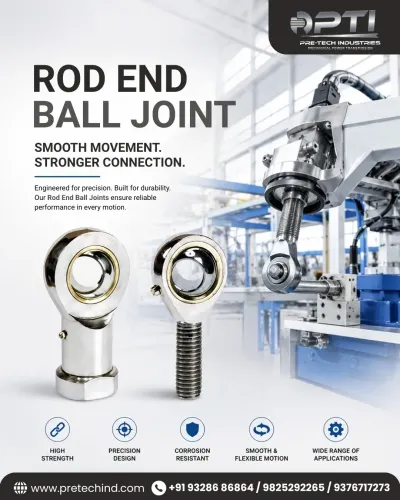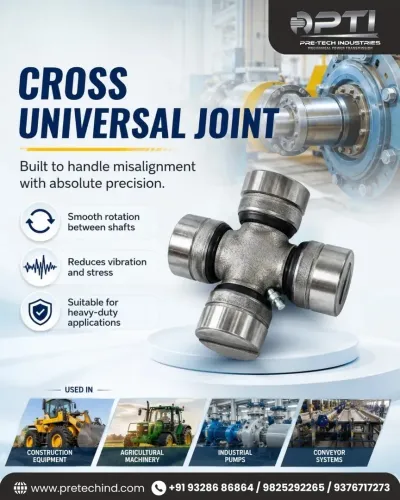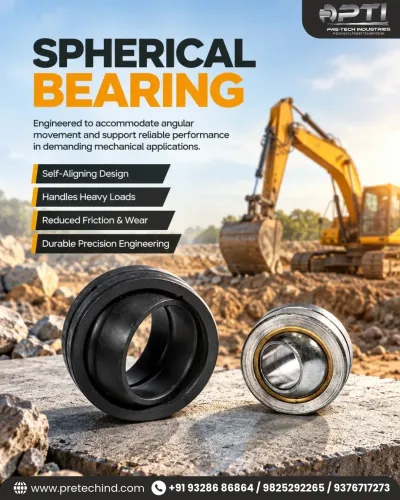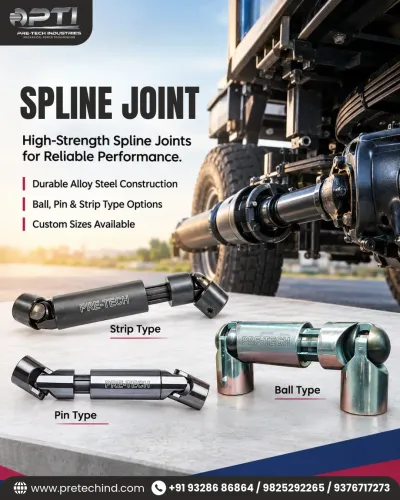
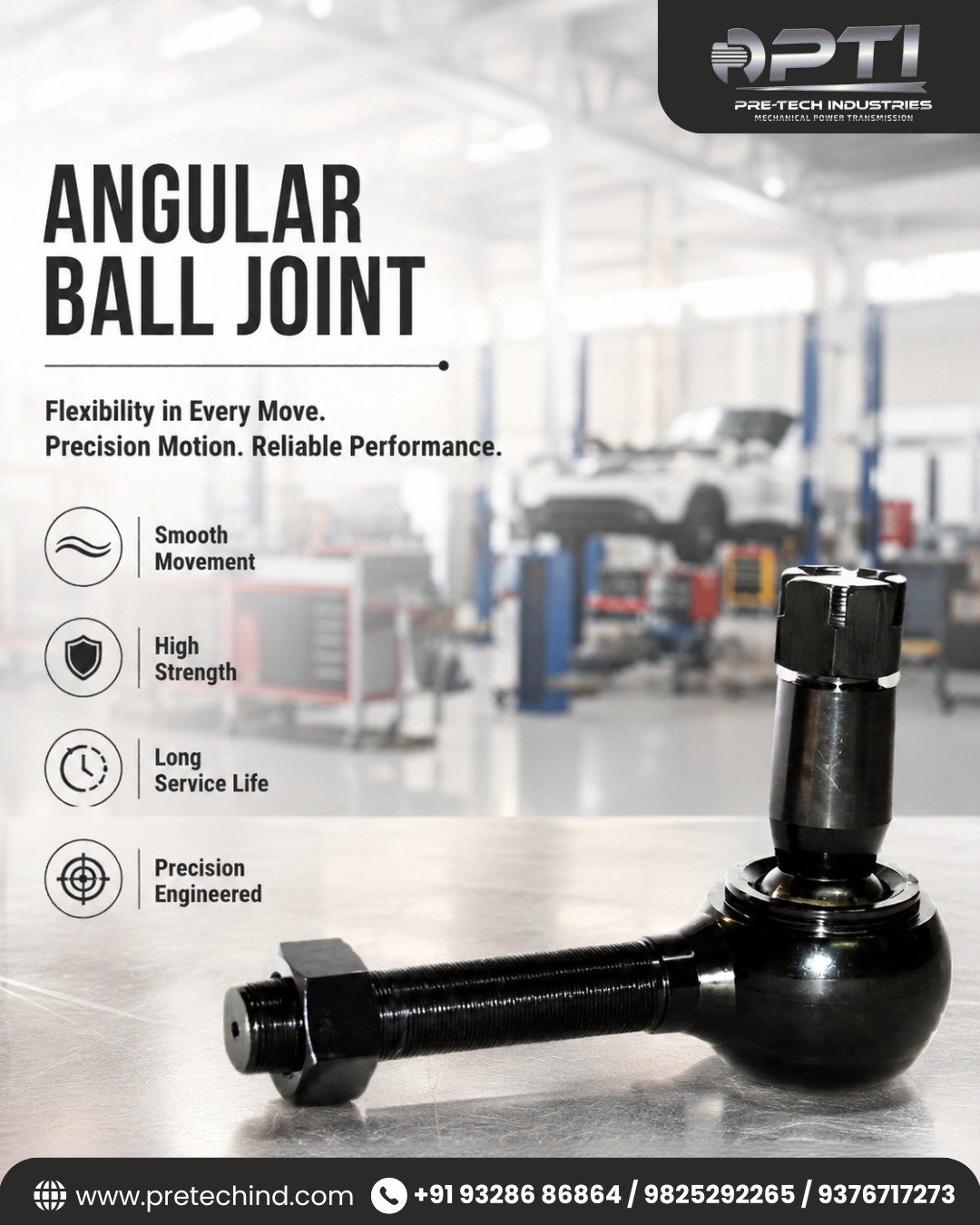
An Angular Ball Joint is an essential mechanical component that provides flexible movement and secure connections between moving parts. Its spherical construction allows connected components to move at different angles while maintaining stability during operation. It supports smooth motion, mechanical flexibility, and reliable performance in various industrial applications.
For machinery that requires precision and strength, selecting a quality Angular Ball Joint is important for maintaining operational efficiency. Pre-Tech Industries focuses on mechanical power-transmission components designed to meet diverse industrial requirements. Choosing the right joint can help improve equipment functionality and support long-term performance.
What Is an Angular Ball Joint?
An Angular Ball Joint is a mechanical connecting component that allows angular movement between two connected parts. It generally features a ball-shaped section fitted inside a socket, providing flexibility in multiple directions without disconnecting the components.
This design makes it suitable for mechanical systems that require angular movement, alignment adjustments, and continuous operation. A properly designed Industrial Ball Joint helps maintain a stable connection while supporting smooth mechanical movement.
How Does an Angular Ball Joint Ensure Smooth Movement?
An Angular Ball Joint works through its spherical design, which allows the ball to move within the socket. This arrangement provides angular flexibility and helps connected components adjust their positions during operation.
Its important performance benefits include:
- Smooth Movement: Supports flexible movement between connected mechanical components.
- High Strength: Helps withstand operating forces when manufactured according to suitable load requirements.
- Stable Connection: Maintains a secure connection while allowing angular movement.
- Long Service Life: Quality materials and proper maintenance help minimize premature wear.
- Precision Performance: Accurate manufacturing supports proper fitting and dependable operation.
These characteristics make an Angular Ball Joint a useful component in mechanical assemblies that require flexibility, strength, and consistent performance.
Key Features of a High-Quality Angular Ball Joint
Selecting the right ball joint can improve machinery performance. Important features to consider include:
1. Flexible Angular Movement
The spherical construction allows connected components to move at different angles, supporting flexibility in mechanical operations.
2. High Mechanical Strength
A strong, durable construction helps the joint handle mechanical loads and operating pressure within its design specifications.
3. Precision Engineering
Accurate dimensions and proper surface finishing support secure installation, smooth articulation, and consistent performance.
4. Reliable Durability
Suitable materials and regular maintenance can help reduce wear and contribute to a longer working life.
5. Consistent Performance
A properly selected Heavy Duty Angular Ball Joint supports stable movement in applications involving continuous mechanical operation.
Industrial Applications of Angular Ball Joints
Angular ball joints are used in mechanical systems where flexible connections and controlled movement are important. Some common applications include:
- Industrial Machinery: Provides flexible connections between moving machine components.
- Mechanical Linkages: Supports angular movement between connected parts.
- Automotive Systems: Used in steering, suspension, and linkage assemblies.
- Power Transmission Equipment: Helps accommodate angular movement in mechanical connections.
- Engineering Equipment: Supports flexible connections in specialized industrial machinery.
Selecting an appropriate ball joint depends on load capacity, movement requirements, dimensions, and operating conditions.
How to Choose the Right Angular Ball Joint?
Before purchasing an Angular Ball Joint, consider these important factors:
- Load Capacity: Check the mechanical load and forces the joint must handle.
- Angular Movement: Select a joint that meets the required range of motion.
- Material Quality: Consider materials suitable for the application and working environment.
- Dimensions: Verify measurements and compatibility with the equipment.
- Operating Conditions: Evaluate vibration, temperature, moisture, and exposure to contaminants.
- Maintenance: Understand lubrication and inspection requirements to maintain performance.
Comparing these factors can help businesses select a component that meets their machinery requirements.
Why Choose Pre-Tech Industries for Angular Ball Joints?
Pre-Tech Industries specializes in mechanical power transmission solutions for industrial applications. When choosing an Angular Ball Joint Manufacturer in Ahmedabad, buyers should look for precision engineering, reliable construction, suitable product specifications, and consistent quality.
Businesses searching for an Angular Ball Joint Supplier in Gujarat or an Angular Ball Joint Distributor in India should consider product compatibility, manufacturing standards, technical support, and supply capabilities.
Pre-Tech Industries aims to meet industrial requirements with mechanical components designed for smooth movement and dependable performance. Buyers looking for an Angular Ball Joint Exporter from India can contact the company to discuss product specifications and availability.
For businesses comparing the Top 5 Angular Ball Joints in Ahmedabad, evaluate construction quality, dimensional accuracy, load capacity, durability, and application suitability before deciding.
Frequently Asked Questions (FAQs)
1. What is the main purpose of an Angular Ball Joint?
An Angular Ball Joint connects mechanical components while allowing angular movement. It helps maintain flexible, stable connections in various mechanical applications.
2. Which factors should be considered when selecting an Angular Ball Joint?
Consider load capacity, range of motion, material quality, dimensions, durability, and compatibility with the machinery.
3. Where are Industrial Angular Ball Joints commonly used?
They are used in industrial machinery, mechanical linkages, automotive assemblies, engineering equipment, and suitable power transmission applications.
Keywords